 Andrei Rublev: Key Milestones and Artistic Legacy
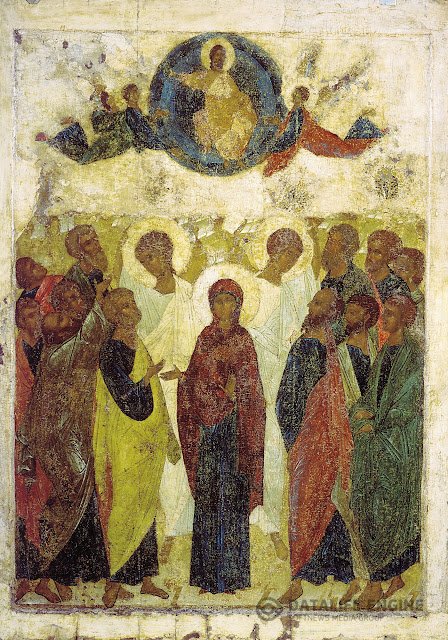
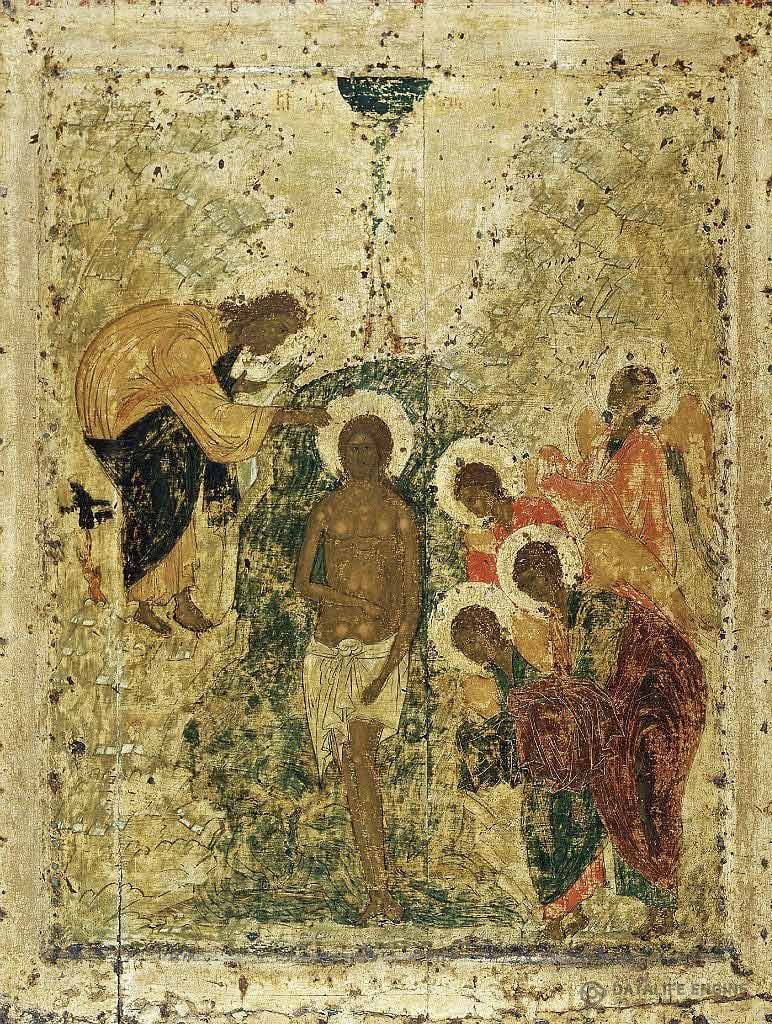
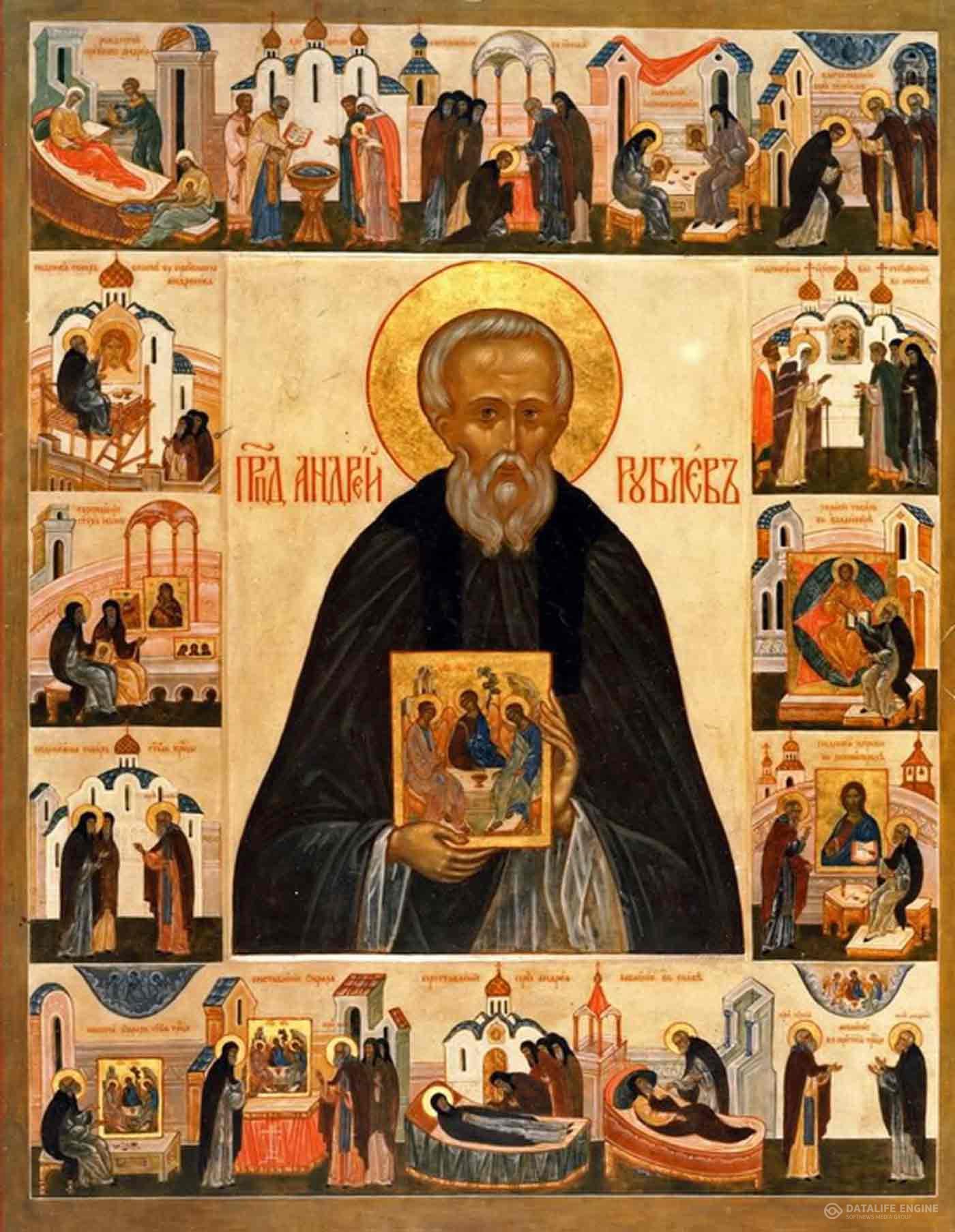
Andrei Rublev (c. 1360 – 1428 or 1430) is widely regarded as the greatest master of the 15th-century Moscow school of icon painting, manuscript illumination, and monumental fresco painting. His oeuvre defined the historical trajectory of Russian sacred art, seamlessly fusing classical Byzantine traditions with a distinctive national aesthetic.
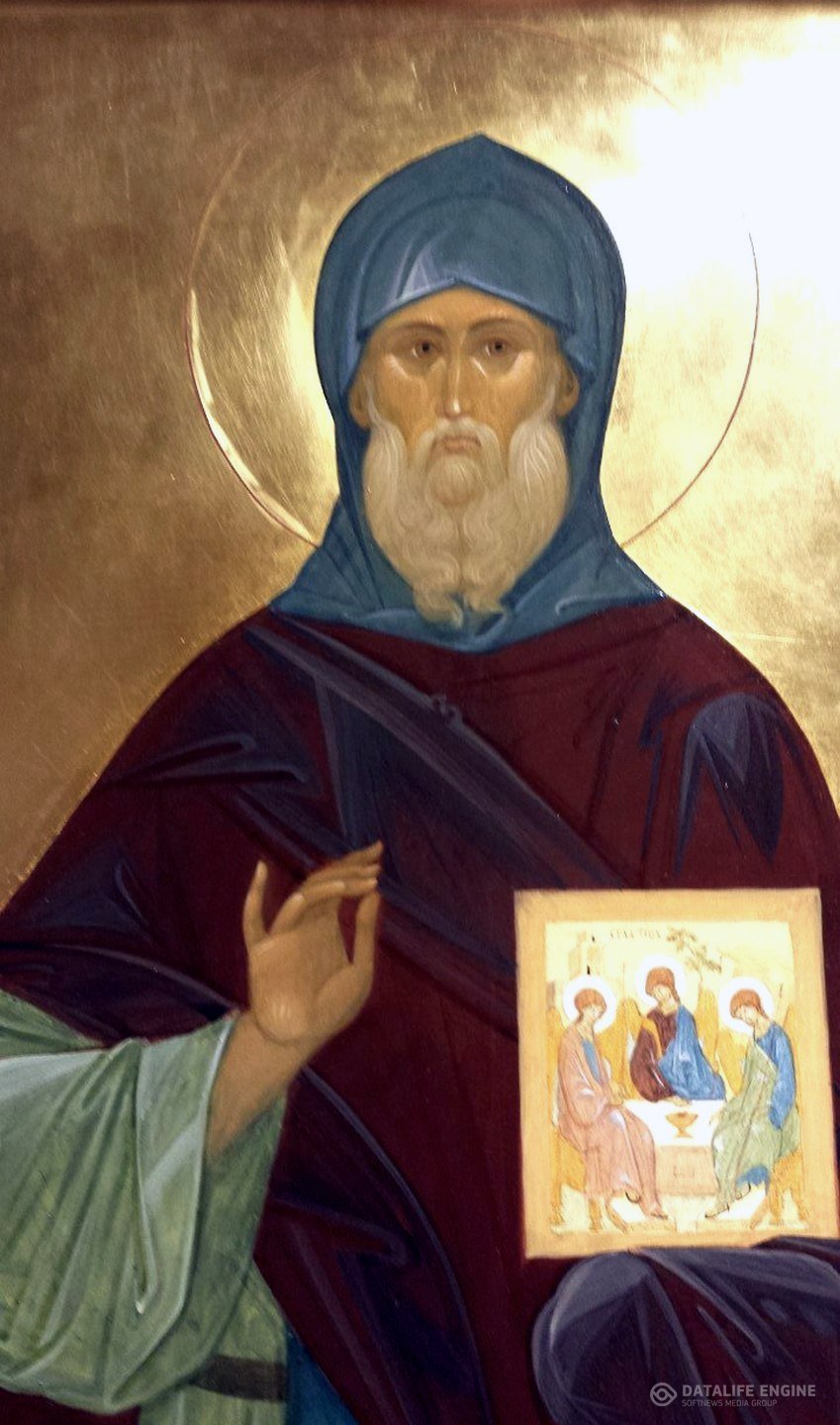
In 1988, he was canonized by the Russian Orthodox Church in the rank of Venerable (Prepodobny / monastic saint).
Historical Sources and Biography
Written records of the master’s life are exceptionally sparse, with key details preserved only in monastic chronicles and annals:
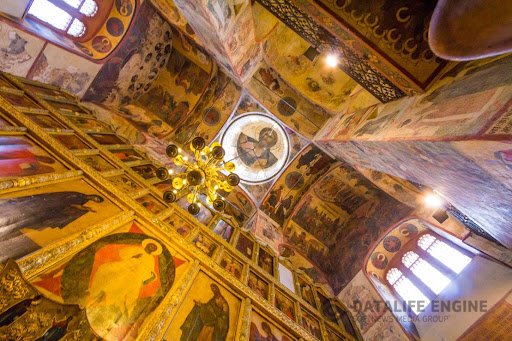
- Year 1405 — The earliest chronicle mention. Rublev, alongside the renowned master Theophanes the Greek and Prokhor of Gorodets, is commissioned to paint the frescoes of the Cathedral of the Annunciation in the Moscow Kremlin. His inclusion in such a prestigious grand-princely commission alongside established masters attests to his high professional standing.
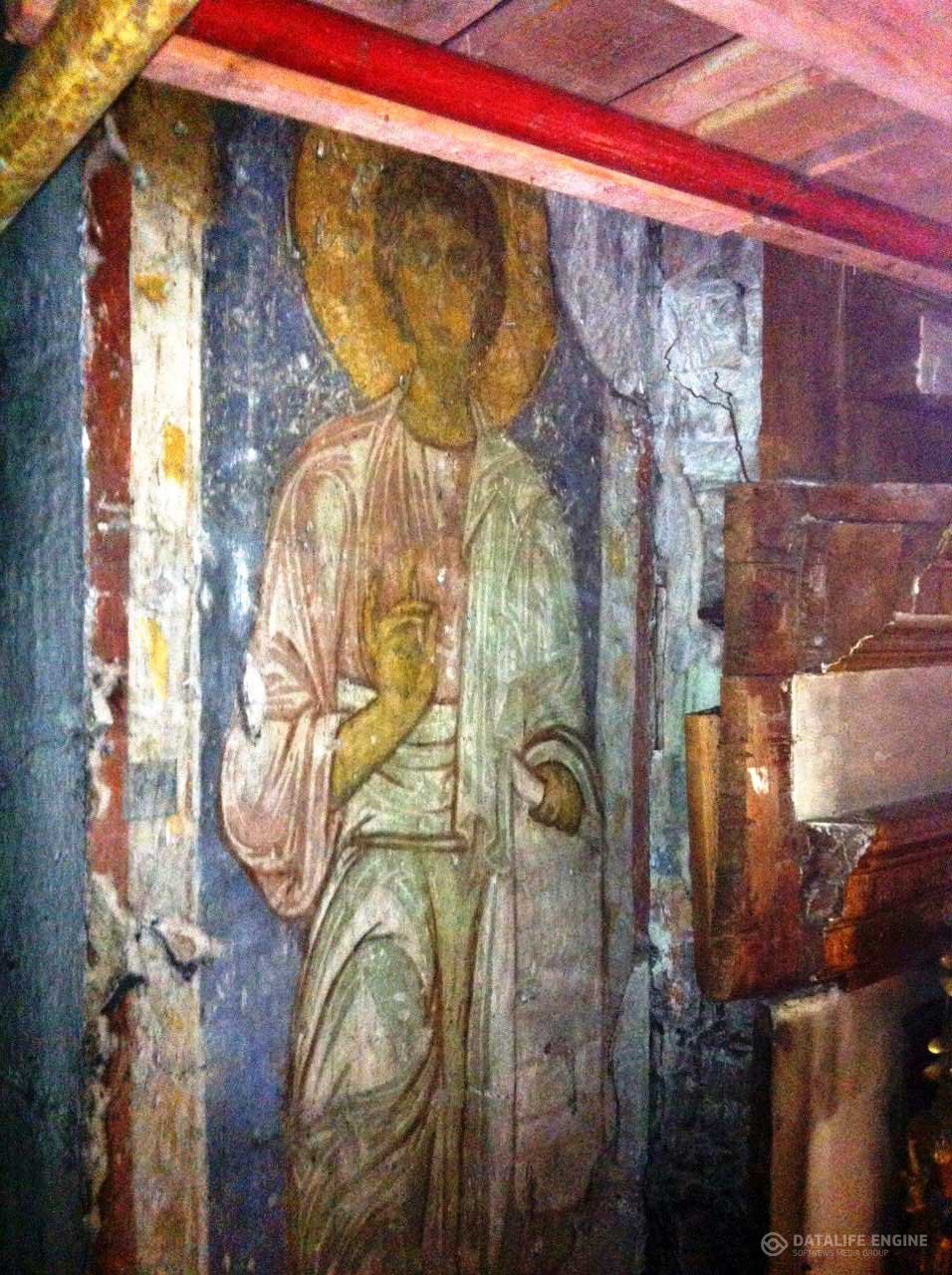
- Year 1408 — Collaborating with Daniil Chyorny (Daniel the Black), he paints the frescoes of the Cathedral of the Dormition in Vladimir.
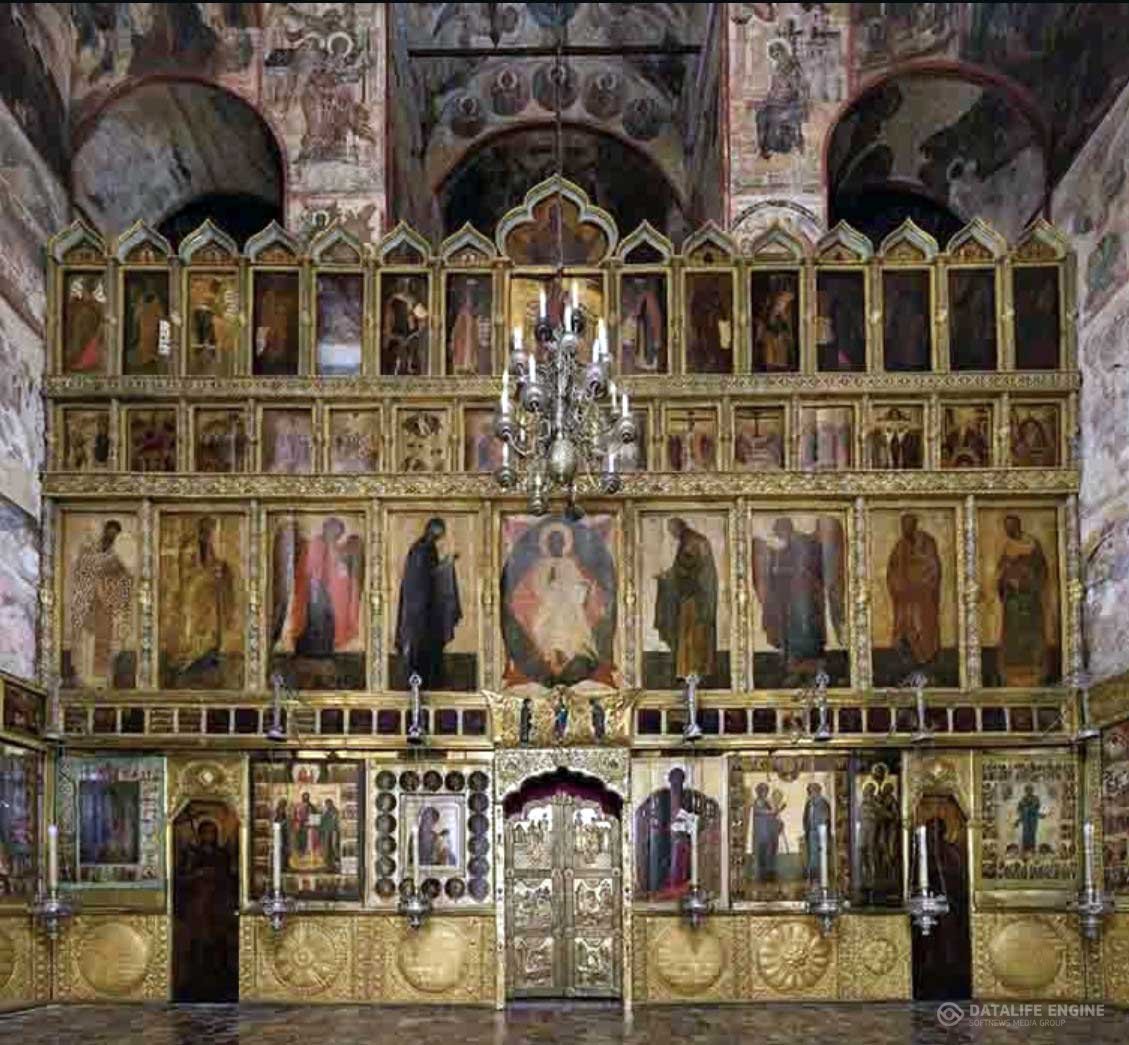
- The 1420s — Rublev directs the painting and the creation of the iconostasis for the Trinity Cathedral at the Trinity-St. Sergius Lavra.
- Late 1420s — He contributes to the decoration of the Savior Cathedral at the Andronikov Monastery in Moscow, which became the master's final commission.
Three Masterpieces That Redefined Sacred Art
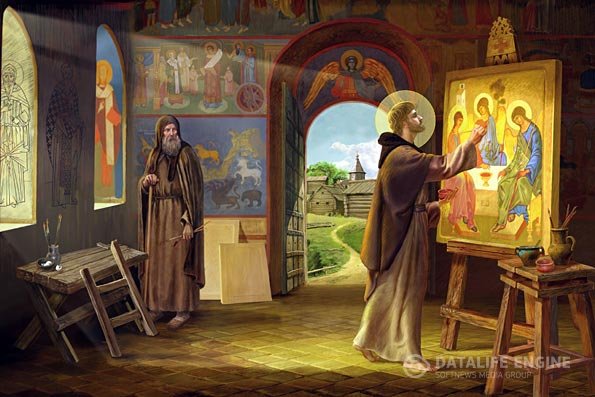
1. The "Holy Trinity" Icon (c. 1411 or 1425–1427)
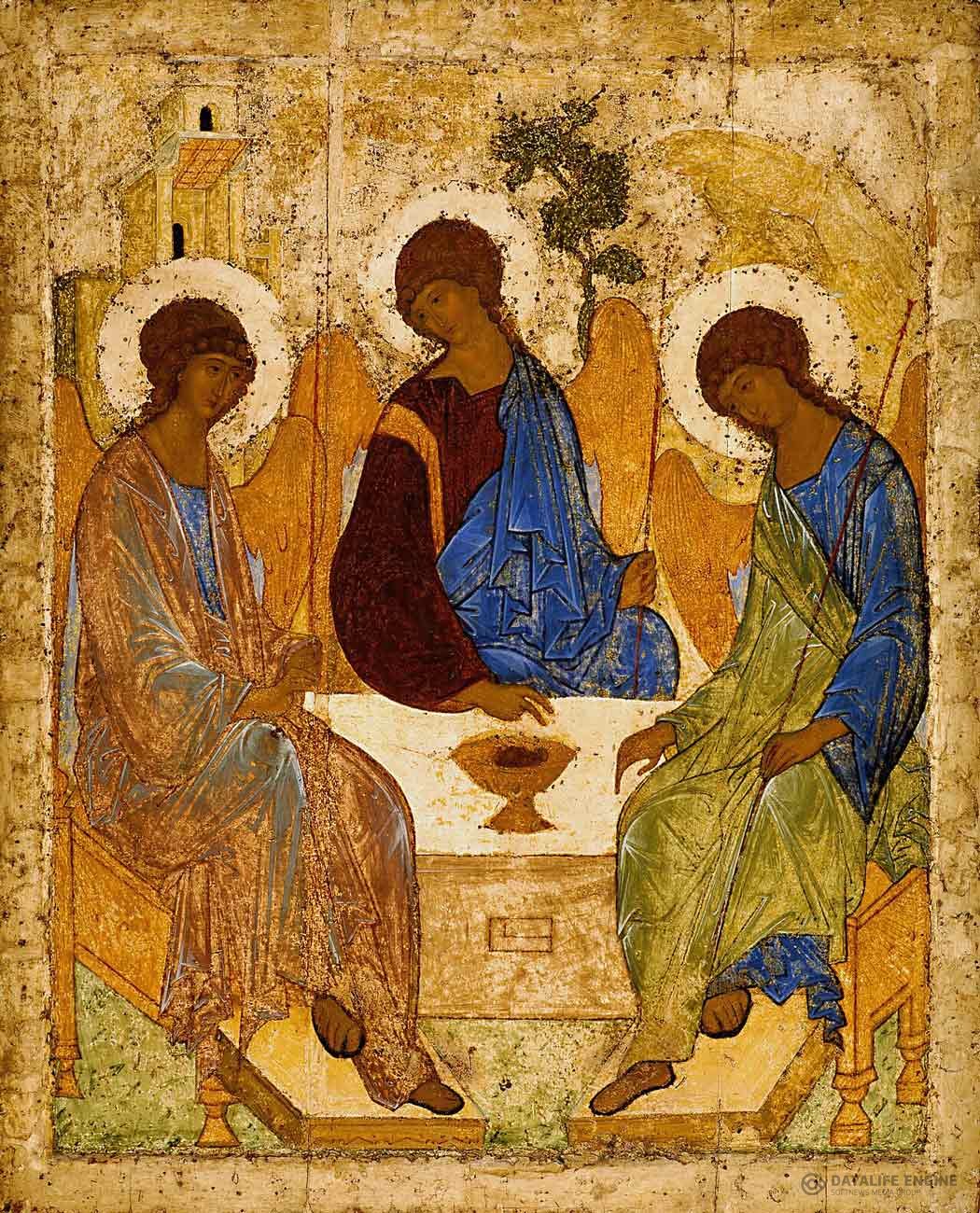
The supreme masterpiece of Russian icon painting, in which Rublev transcended the rigid, static dogmatism of earlier Byzantine models.
- The Genius of Composition: The three angels (representing the Hospitality of Abraham) are inscribed within an invisible circle—the symbol of eternity. Their postures evoke a fluid, continuous circular motion. The central and left angels gently incline their heads toward the right, establishing a silent yet profound Trinitarian dialogue.
- The Color Revolution: Rublev introduced the celebrated "golubets"—a luminous, heavenly lapis lazuli (ultramarine blue). Prior to Rublev, this precious pigment (imported from remote Badakhshan) was rarely used in such abundance in Rus due to its exorbitant cost.
- The Theological Intent: Created during a dark era of bloody princely feuds, the "Trinity" was painted, as Epiphanius the Wise famously wrote, “so that by gazing upon the Holy Trinity, the fear of the hateful discord of this world might be overcome.” It was a visual manifesto of spiritual unity, harmony, and love.
2. The Zvenigorod Deesis (c. 1410s)
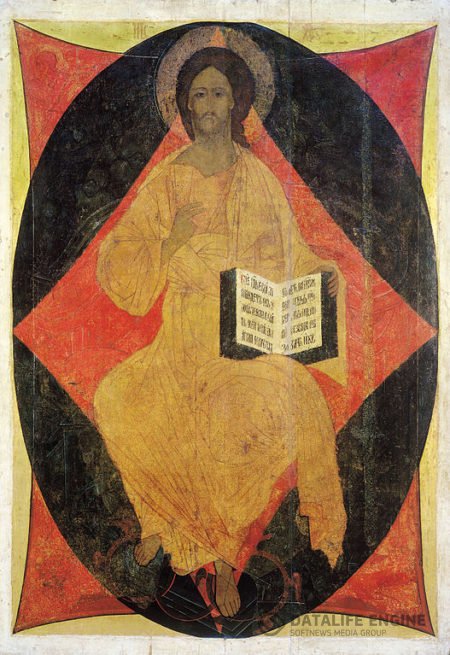
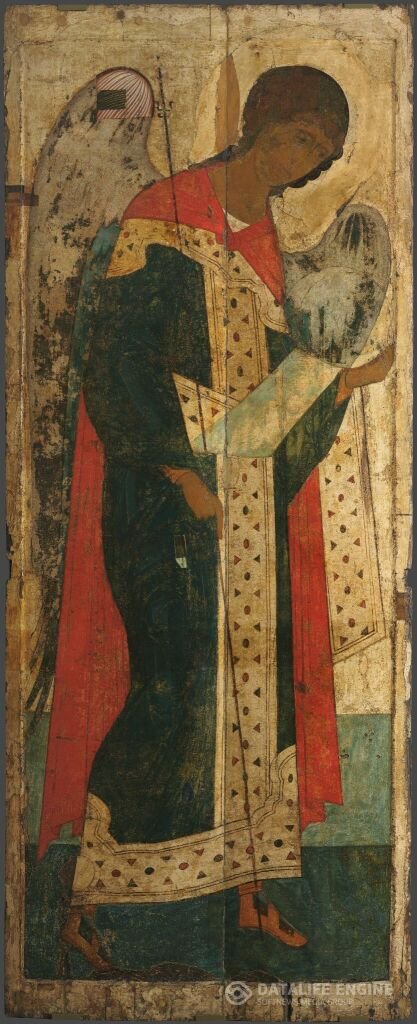
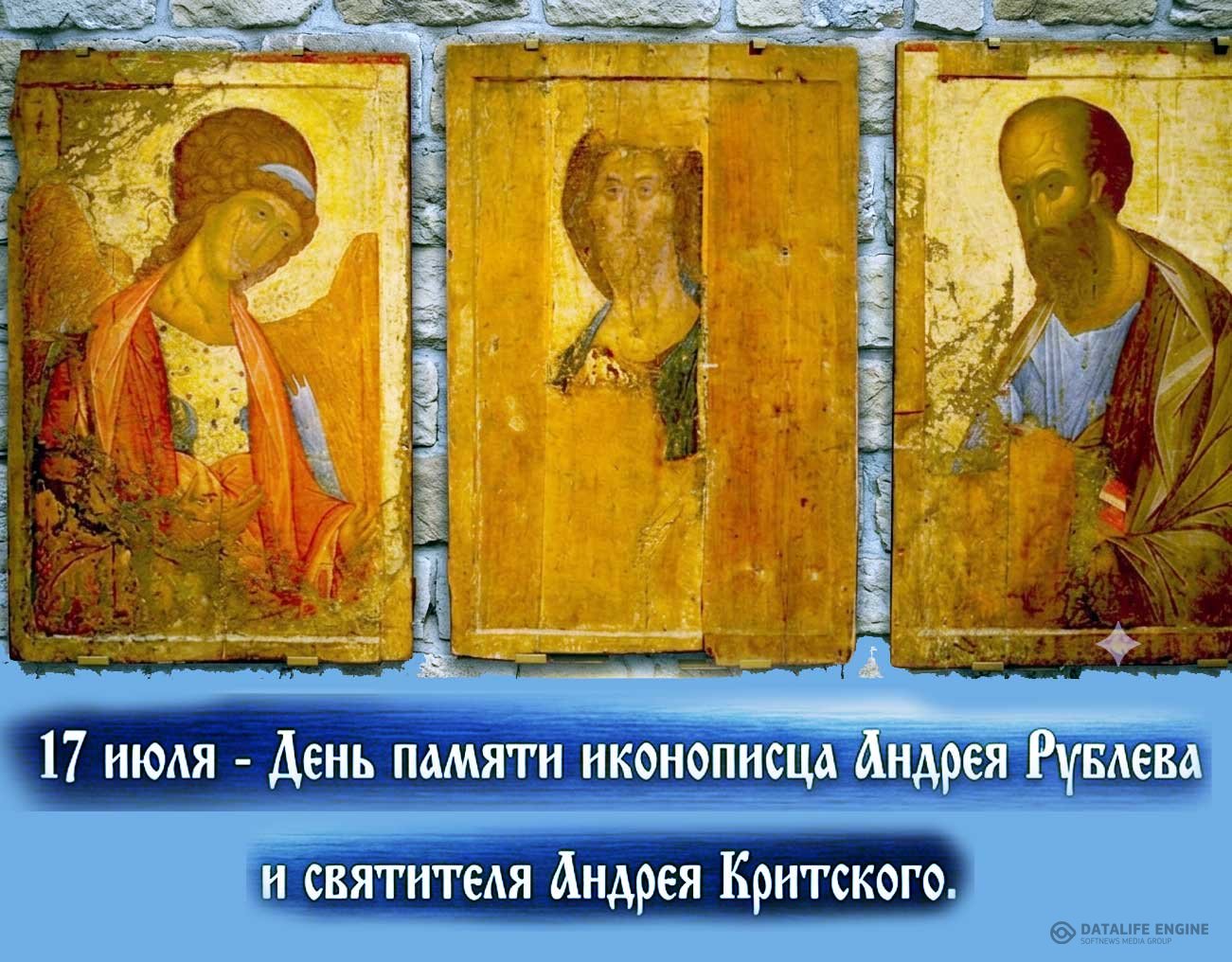
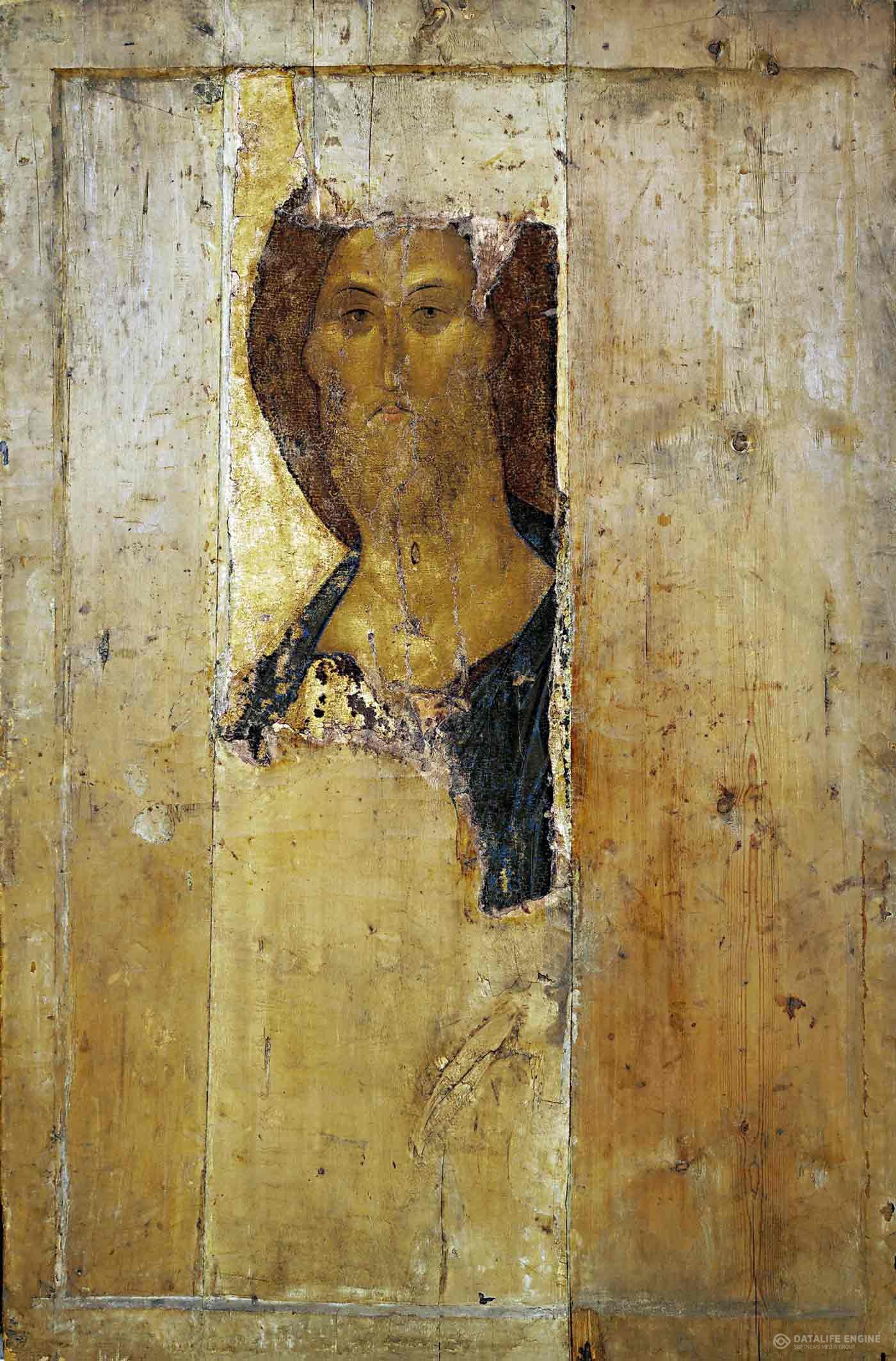
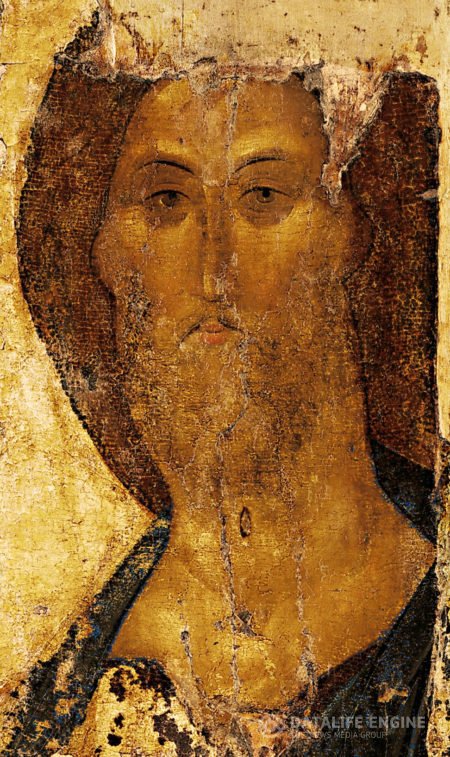
Three surviving half-length icons (The Savior, Archangel Michael, and Apostle Paul) discovered in 1918 in a firewood shed near the Cathedral of the Dormition "on the Gorodok" in Zvenigorod.
- "Rublev’s Savior" (The Zvenigorod Savior) is perhaps the most deeply humanized depiction of Christ in Christian art. Moving away from the severe, majestic Byzantine Pantokrator (the Stern Judge), Rublev portrays a gentle, compassionate Christ with a profound, understanding, and slightly melancholic gaze. Here, there is no terrifying wrath—only boundless mercy.
3. Frescoes of the Cathedral of the Dormition in Vladimir (1408)
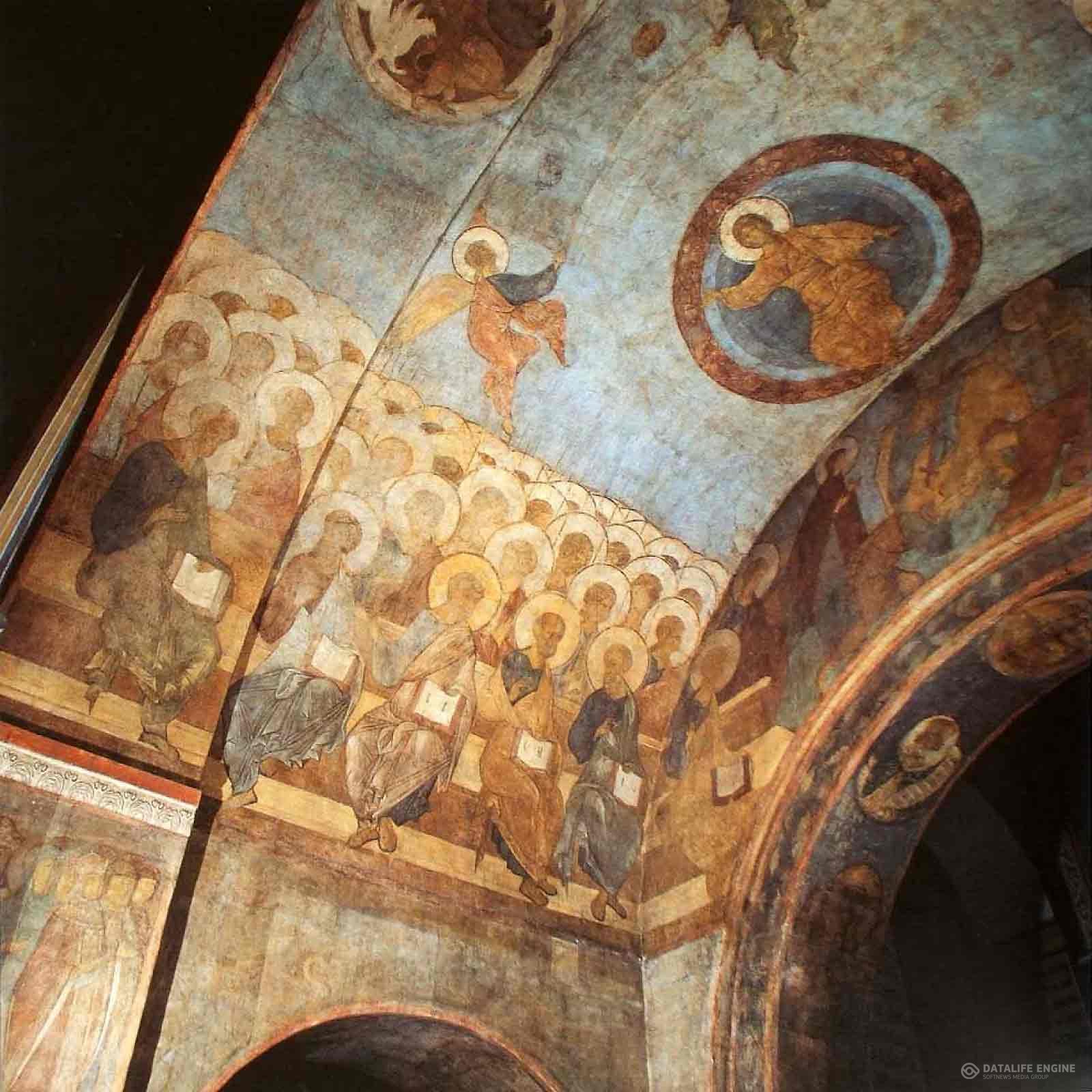
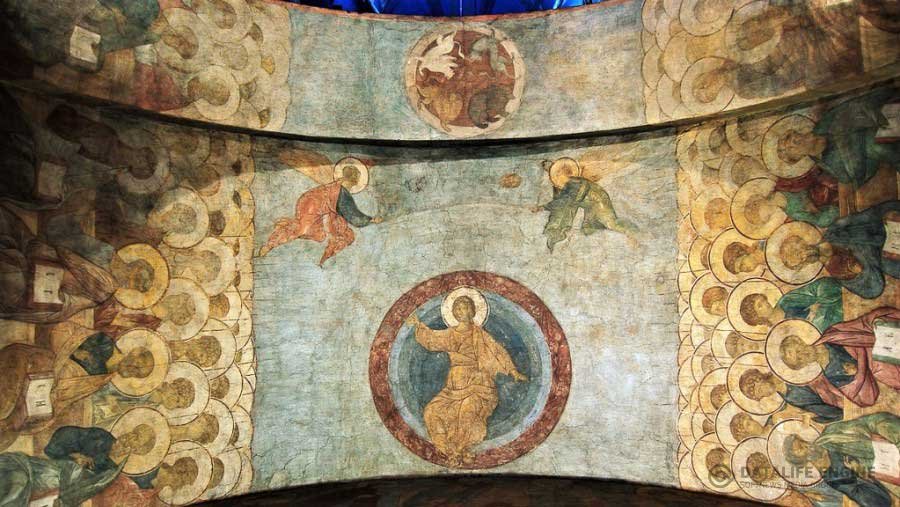
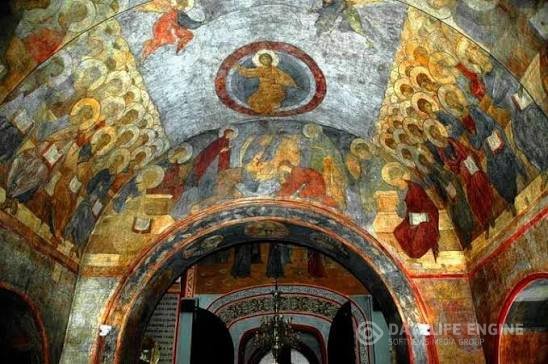
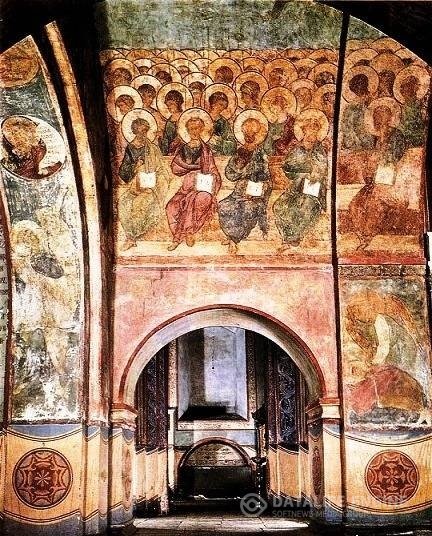
A collaborative monumental project with Daniil Chyorny. The fresco depicting the "Last Judgment" is particularly revolutionary.
- A Paradigm Shift: Traditionally, the Last Judgment was depicted to instil fear and dread through graphic scenes of hellfire, demons, and torment. Rublev transformed this terrifying subject into a "Feast of the Righteous". His Last Judgment is not a courtroom trial, but a long-awaited, joyful reunion of humanity with God, filled with the serene anticipation of Paradise.
- These frescoes represent the largest surviving cohesive ensemble of Rublev's monumental work. By removing eschatological dread, Rublev prioritized the themes of forgiveness, divine justice, and spiritual joy.
What Makes the Rublevian Style Unique?
Andrei Rublev’s reform of Eastern Christian iconography marked a transition from the highly expressive, ascetic, and severe Byzantine manner to a deeply harmonious, contemplative style:
- Melodic Lines: The use of soft, sweeping, curvilinear silhouettes that instill a sense of absolute inner equilibrium. The contours of his figures literally "sing," devoid of sharp angles or dramatic breaks.
- Luminous Color Palette: Rublev replaced the dark, earthy ochres typical of Byzantine painting with light, pastel tones: sky blue, golden-yellow, pale green, and delicate turquoise. He applied paint in thin, transparent layers (plav'), allowing the white gesso (levkas) ground to reflect light from within, creating a signature inner glow.
- Philosophical Depth: External dramatic expression is replaced by internal contemplation (hesychia / divine quietness) and psychological refinement of the holy countenances.
Contrast in Style: While his mentor and collaborator Theophanes the Greek painted with dramatic, expressive white brush-strokes (resembling flashes of lightning) to emphasize cosmic tragedy and the consuming fire of the Godhead, Rublev’s hand is the exact opposite—radiating absolute peace, light, and cosmic harmony.